Who Owns the Character in Your Profile Picture and How an AI Avatar Generator Helps
Nearly everybody online has used somebody else’s character as their profile picture at some point, and almost nobody has been contacted about it.
That is not because it is permitted. It is because rights holders pursue distribution rather than individuals, and an anime character on a personal account is not worth anybody’s attention. The practical risk to a private person posting about their lunch is close to zero and has been for twenty years.
What changes that calculation is money. The moment an account sells something, promotes something, or earns from a platform program, it stops being a personal account and the tolerance that covers it stops applying.
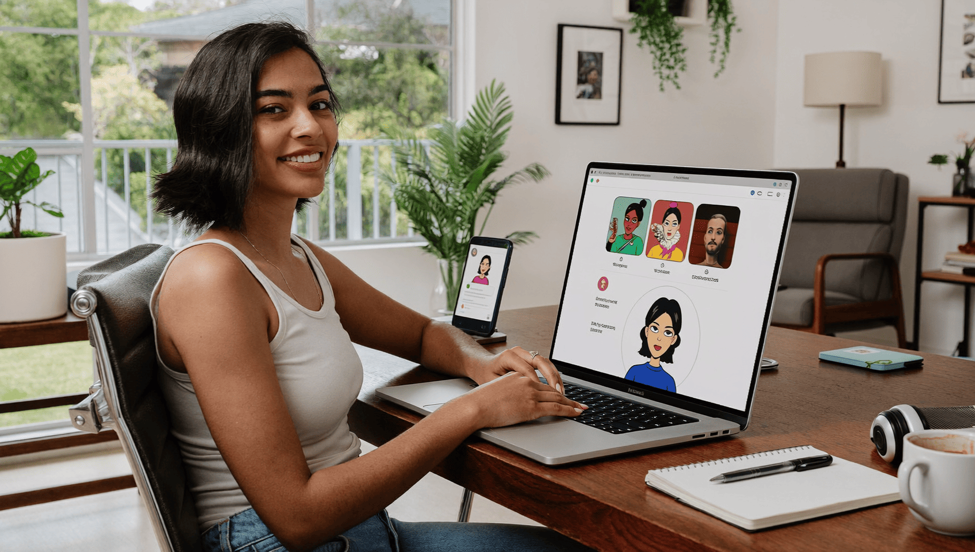
An AI Avatar Generator with realistic avatar creation features from Higgsfield produces something you own outright, which matters very little on a personal account and matters a great deal on any account that might one day earn.
Is Using a Character as an Avatar Actually Illegal?
Technically yes, practically ignored for personal use.
A character design is a protected expression owned by whoever created it. Copying it, including cropping an official image, is reproduction. That is the legal position and it has not changed.
What actually happens:
- Rights holders target distribution, not individual users
- Enforcement focuses on commercial use and on sites hosting at scale
- Personal accounts are effectively never pursued
- Platforms act on complaints rather than monitoring proactively
- An AI Avatar Generator original removes the question entirely
Being honest about this matters, because guides that describe personal avatar use as a serious legal risk are not credible and people correctly ignore them.
The risk is real at a different point, and knowing where that point sits is the useful information.
What Changes When an Account Earns Money?
Everything, and the shift is sharper than people expect.
- Monetized channels are commercial use by definition
- Business and creator accounts are held to different platform standards
- Sponsored content makes the whole account commercial
- Merchandise is the clearest breach available
- An AI Avatar Generator identity is the only version you can build a brand on
The merchandise case ends careers in small creator economies. Selling anything carrying a character you do not own is straightforward infringement, and marketplaces remove listings and close accounts over it.
The quieter problem is brand building. An account that grows around somebody else’s character cannot be commercialized, cannot be trademarked, and cannot survive a change of policy or a complaint.
Decide early. Changing an avatar after building an audience costs recognition you spent years accumulating.
Is a Logo Different From a Character?
Considerably, and this surprises people.
Character art is a copyright matter. A company logo is a trademark matter, and trademarks are enforced far more aggressively because the owner has an obligation to defend them.
- Using a logo as an avatar can suggest affiliation, which is the core trademark concern
- Rights holders must police their marks or risk weakening them
- Platforms act quickly on trademark complaints, faster than on copyright
- Impersonation rules apply on top, independently
- Never use an AI Avatar Generator to produce anything resembling a company mark
The affiliation point is the whole issue. A viewer seeing a familiar logo as somebody’s avatar may reasonably assume a connection, and that assumption is exactly what trademark law exists to prevent.
Supporting a brand is not a defense. Neither is a bio line saying you are not affiliated, though it helps.
Make something that is clearly yours. It is also better branding.
What About Fan Art?
More complicated, and the person most wronged is usually the artist.
A fan artist owns the drawing they made. They do not own the character, which means their work sits in the same tolerated grey zone as everything else.
Using their art as your avatar wrongs two parties at once:
- The original rights holder, whose character it is
- The fan artist, whose specific drawing you took
- Credit is not permission, however prominently given
- Asking is usually welcomed, and frequently granted
- An AI Avatar Generator alternative avoids both
The artist is the one who notices. Rights holders have no idea your account exists, and the person who drew the picture sees it on their timeline within a week.
Many fan artists take commissions specifically for avatars, and the cost is usually modest. Somebody drawing something for you is both lawful between you and better, because it is yours.
Never remove a signature or watermark. That turns an oversight into something deliberate.
What Do Platforms Actually Enforce?
Their own rules, faster than any court and with less process.
Platform policies are separate from law and frequently stricter. They act on complaints, and the account holder generally has no meaningful opportunity to argue first.
- Copyright complaints result in removal, usually without review, whatever an AI Avatar Generator could have offered instead
- Trademark complaints move faster still
- Impersonation rules apply to avatars as well as names
- Repeat complaints lead to suspension
- Monetization can be withdrawn without the account being removed
The monetization withdrawal is the one that hurts most and is least visible. An account can keep running while quietly losing the revenue it relied on, and the appeal process is slow.
Read the policies of wherever your audience actually is. They differ considerably and none of them match the legal position exactly.
What Should Never Be Produced?
Characters, real people, and anything resembling a mark.
- Never produce a recognizable copyrighted character
- Never produce a real person, living or dead
- Never produce something resembling a company logo
- Never produce an avatar intended to impersonate anybody
- Never present an AI Avatar Generator image as somebody’s actual photograph
The impersonation case is the one with immediate consequences. Platforms treat impersonation considerably more seriously than copyright, and the penalties start at suspension.
Producing a character that merely resembles a famous one is the same problem at a lower resolution. If somebody would recognize who it is based on, the resemblance is the issue.
Original means original. A different hair color on a recognizable design is not a different character.
How Do You Design Something Original?
By starting from attributes rather than from an existing character.
- Pick two or three traits you want associated with you
- Choose a color before anything else, since color is recognized first
- Decide whether it is a person, an animal or an object
- Avoid archetypes that map onto specific known characters
- Produce several AI Avatar Generator versions and compare
The color-first approach works because recognition at thumbnail size runs on color before form. People identify avatars in a chat list by a color patch long before any detail resolves.
Starting from attributes rather than references keeps you away from accidental resemblance. Describing what you want it to convey produces something different from describing a character you liked.
Non-human options are underused and entirely safe. An animal, a plant, an object or an abstract mark does the identification job without any of the above.
Does This Apply to Gaming Accounts?
It does, with the added complication of platform-supplied assets.
Gaming platforms frequently provide avatars drawn from their own titles, which are licensed for use on that platform and not elsewhere.
- In-game avatar systems are licensed for that platform only
- Screenshots of your own character sit in an unclear position
- Game art used off-platform is the same issue as anything else
- Streaming and monetized play make it commercial
- An AI Avatar Generator identity travels everywhere
The screenshot point is genuinely murky. A character you built inside a game is partly your creative choice and entirely made from somebody else’s assets, and most publishers permit personal sharing without granting broader rights.
For anybody streaming or monetizing, an original identity is the only safe choice and the only one that builds anything.
Where Does an AI Avatar Generator Help?
By producing something nobody else has a claim on.
- An original character you can use anywhere
- Commercial use without a licensing question
- Consistency across platforms, from one source
- Variations and seasonal versions from the same base
- No complaint risk, since nobody owns it but you
The commercial point is the substantive one. An AI Avatar Generator identity can appear on merchandise, on a business page, in sponsored content and on a storefront, none of which is available to somebody using a borrowed character.
Curation sites and galleries have their place for inspiration, and a collection organized by style, as described on this site, is useful for working out what you actually want before making your own.
Use the references to decide a direction, then produce something original in that direction. That is the difference between inspiration and copying, and it is a real difference.
Does Any of This Affect Teams and Communities?
It does, and group identities are where the question gets decided for everybody at once.
A Discord server, a guild, a club or a small team adopting a shared avatar style is making one decision that applies to dozens of people, which makes it worth getting right once.
What works for a group:
- A shared original character set, varied per member
- One consistent AI Avatar Generator treatment across everybody
- A distinguishing element per person, such as color or accessory
- Nothing borrowed, since a group is more visible than an individual
- A record of who made it, in case the group outlives the maker
The visibility point is the practical argument. A hundred accounts using the same borrowed character is a pattern, and patterns attract the attention that individuals never do.
A matched set also does something a borrowed character cannot, which is signal membership. Everybody recognizes their own group instantly and nobody outside it is confused about what they are looking at.
Agree it once and produce the whole set in a session. Adding somebody in six months is then a five minute job rather than a mismatch.
What Should Be Kept and Organized?
The source, the variations and a note of what you used.
- Keep the full-size AI Avatar Generator original, not only the cropped exports
- Export square and circle-safe versions
- Note the colors beside the Higgsfield project for matching graphics elsewhere
- Keep the Higgsfield project for future variations
- Record the date you created it
The variation point becomes valuable quickly. A seasonal version, a different crop or a matching banner is a short job when the source exists and a rebuild when it does not.
Recording the date and keeping the source also establishes provenance. If anybody ever questions where your identity came from, being able to show its creation is the end of the conversation.
Back the Higgsfield files up somewhere other than one device.
What Would Changing Over Involve?
An afternoon, and a week of people noticing.
- Decide the attributes you want it to carry
- Pick a color that works in light and dark modes
- Produce several options in an AI Avatar Generator
- Check nothing resembles an existing character
- Test the Higgsfield output at thumbnail size
- Change every platform on the same day from the Higgsfield exports
- Save the Higgsfield project with the colors noted
Then leave it alone for a year, because recognition is built by repetition.
The same-day change matters more than the design. A staggered switch leaves you recognizable in some places and not others for weeks.
FAQ’s
Does anybody actually enforce this against an anime avatar?
On a personal account, realistically no. Rights holders pursue distribution and commercial use, not individuals posting about their day.
When does that change?
The moment the account earns. Monetization, sponsorship, merchandise and business pages are all commercial uses.
Is a logo different from character art?
Yes, and worse. Trademarks must be defended by their owners, so logo complaints move faster and further than copyright ones.
Can fan art be used if the artist is credited?
Credit is not permission. Ask the artist, who will frequently agree or offer a commission.
Can an AI Avatar Generator copy an existing character?
It should not, and a recolored version of a recognizable design is the same problem. Start from attributes instead.
Is there a free way to try this?
Higgsfield operates a free tier as part of an AI creative suite, which covers producing a few options before choosing one.
Conclusion
The honest position on borrowed avatars is that personal use is tolerated and commercial use is not, and the second one arrives sooner than most people plan for.
An AI Avatar Generator produces something you own outright, which is worth nothing on a casual account and worth a great deal on one that might become a business.
Pick a color, start from attributes rather than references, check it at thumbnail size, and change everywhere on the same day. Then leave it be.